
You want your shipments to ensure the safety of goods and not get damaged, right? Keeping goods safe is very important in logistics. If you do not care about this, you can lose money or get in trouble. Here is how damage can happen:
| Type of Damage | Common Cause |
| Physical Damage | Not handled the right way |
| Water Damage | Weather or other outside things |
| Contamination Damage | Packaging is not good enough |
Let’s find the best ways to keep your cargo safe and maintain the safety of goods together.
Key Takeaways
- Always pack and label your goods the right way. Good packaging keeps items safe from harm during transport.
- Pick a transportation company you can trust. A good partner will care about keeping your goods safe.
- Teach your team how to handle things safely. Good training helps stop accidents and keeps shipments safe.
Ensuring Safety of Goods
Key Steps for Safe Transport
You want your shipments to arrive safely and in perfect condition. You can follow some simple steps to make sure the safety of goods is never at risk. Here’s what you should do:
- Figure out if your goods are hazardous. This helps you know what special care they need.
- Find the right shipping name and UN number. This keeps things clear for everyone handling your cargo.
- Package and label your goods the right way. Good packaging protects your items from bumps, water, and dirt.
- Fill out all shipping documents. These papers help track your shipment and prove what you are sending.
- Pick a transportation company you trust. A good company will care about the safety of goods as much as you do.
- Train your team well. When your employees know what to do, accidents are less likely to happen.
Tip: Always check if your goods need special handling. For example, food and medicine often need cold temperatures. Hazardous materials must stay away from other items. If you skip these steps, you could face big problems like product contamination or even harm to people.
You should also remember that security matters for every shipment. Use strong packaging and keep an eye on your goods with tracking tools. This helps stop theft and makes sure your cargo arrives safely.
Proactive Safety Measures
You can do more than just follow the basic steps. Proactive safety measures help you avoid problems before they start. Here’s a table with some smart actions you can take:
| Safety Measure | Description |
| Vehicle Maintenance | Check and fix your vehicles often. This stops breakdowns and accidents. |
| Training for Adverse Weather | Teach drivers how to handle bad weather. This keeps everyone safer. |
| Compliance with Regulations | Follow all transport laws. This helps you avoid fines and keeps goods safe. |
| Accident Prevention | Use training and technology to lower the risk of crashes. |
You can also use GPS tracking to watch your shipments in real time. Electronic locks and geofencing add extra layers of security. Only let trusted people handle high-value goods. If something goes wrong, a good plan helps you act fast.
Note: Every type of cargo needs its own safety plan. Perishable goods need cold storage. Hazardous materials need special handling. High-value items may need armored vehicles or even escort cars. When you match your safety plan to your goods, you lower the risk of loss.
You can measure how well your safety steps work by checking for damage, delays, or missing items. If you see problems, update your plan right away. This keeps the safety of goods strong and your business running smoothly.
Why Safety of Goods Matters
Business Impact
You want your business to grow and keep customers happy. When you care about the safety of goods, you protect your company’s name and money. Damaged shipments cost more than just cash. They can hurt your brand and make customers stop trusting you. Here is how these costs add up:
| Type of Cost | Description |
| Direct Costs | You lose money fixing or replacing damaged items. You also pay for returns and give customers money back. |
| Indirect Costs | You pay more for insurance. You might need to hire more workers. You can lose chances to sell more. |
| Reputation Damage | Customers may not be happy. They might stop trusting you and write bad reviews. |
| Increased Operating Costs | You need extra help for returns and repairs. Customer service costs go up, so you spend more. |
You want your customers to feel good about working with you. When you keep goods safe, good things happen:
- Customers trust you more and buy again.
- Workers feel important and do a better job.
- Your company gets new buyers who care about safety.
- People say nice things about your business.
If you forget about safety, you can lose loyal customers. You might get bad reviews. This makes it hard to grow your business.
Legal and Financial Risks
You can get big fines if you break transportation safety rules. Fines are high and keep rising. Here are some common violations and their costs:
| Violation Type | Current Fine | New Fine |
| Record keeping Violations | $1,544 | $1,584 |
| CDL Violations | $15,445 | $15,846 |
Other problems include:
- Making or letting a driver give a false report: Average $7,020, Top $40,420
- Letting someone drive without a valid CDL: Average $3,410, Top $17,700
- Not checking or fixing vehicles: Average $4,404, Top $21,550
You can avoid these fines by updating your safety plans and following all rules. When you care about the safety of goods, you keep your business safe from legal trouble and protect your profits.
Risk Assessment for Safety of Goods
Identifying Hazards
You want to spot risks before they cause trouble. Hazard identification helps you keep shipments safe. Here’s how you can do it:
- Classification: Figure out if your goods are hazardous. You need to know what kind of risk they bring.
- Identification: Assign the right UN/ID number and shipping name. This makes it clear for everyone who handles your cargo.
- Use of UN Numbers: Use the four-digit code for hazardous materials. This helps with tracking and safety checks.
International and Department of Transportation regulations play a big role here. You must follow rules from different countries and local laws. These rules tell you how to package, label, and document your goods. If you skip these steps, you might face fines or delays.
Tip: Always check the latest regulations before shipping. Rules can change, and you want to stay ahead.
Safety Planning
You need a strong plan to protect the safety of goods. A good safety plan covers many parts:
- Show your commitment to safety. Set clear goals for your team.
- Build a planning group. Get people to oversee your safety steps.
- Study past accidents and current risks. Find out what needs fixing.
- Work with others. Ask for ideas from your team and community.
- Update your policies. Make changes that improve safety.
- Pick smart projects. Use data to choose what to fix first.
- Track your progress. Share results and keep everyone informed.
You should review and update your safety plan every year. This keeps your plan fresh and ready for new challenges.
Packaging for Safety
Choosing Packaging Materials
You want your packages to get there safely. Picking good packaging materials is important. Strong boxes and the right padding help stop damage. Look at this table to see which materials work best for different things:
| Packaging Material | Key Features | Example Use Case |
| Heavy-Duty Boxes | Withstand pressure and rough handling | Heavy or fragile items |
| Bubble Wrap | Cushions shocks and vibrations | Delicate items |
| Packing Peanuts | Fill empty spaces, absorb impacts | General void fill |
| Foam Inserts | Custom fit, snug protection | Electronics, glassware |
| Air Pillows | Lightweight, fill voids or wrap items | General cushioning |
| Polyethylene Liners | Moisture barrier, stops water penetration | Electronics, sensitive documents |
| Waterproof Cartons | Repel water, keep shape in wet conditions | Food products |
| Shrink Wrap | Waterproof seal around products | Pallets of beverages |
| Vacuum Sealed Bags | Air and water-tight, extend shelf life | Meats, cheeses |
Pick packaging that fits your product’s size and weight. If your item is breakable, use foam or bubble wrap. Make sure the box is not too big or too small. The item should not move inside the box.
Proper Sealing and Labeling
Sealing and labeling your packages the right way keeps them safe. Always use three strips of tape on the seams and edges. For heavy boxes, use more tape and make it stronger. If your box is a strange shape, wrap tape in different ways.
Put the address label on the top of the box. Do not put labels on seams or corners. Put return information in another spot. Use clear words like “Fragile” or “This Side Up” to help handlers. Put these labels where people can see them easily. Use more than one label if you need to. If you add warnings like “Keep Frozen,” it helps stop mistakes.
Tip: Tamper-evident seals and clear labels help protect your goods. They also show if someone tried to open the package.
Securing Cargo in Transit
Preventing Shifting and Falling
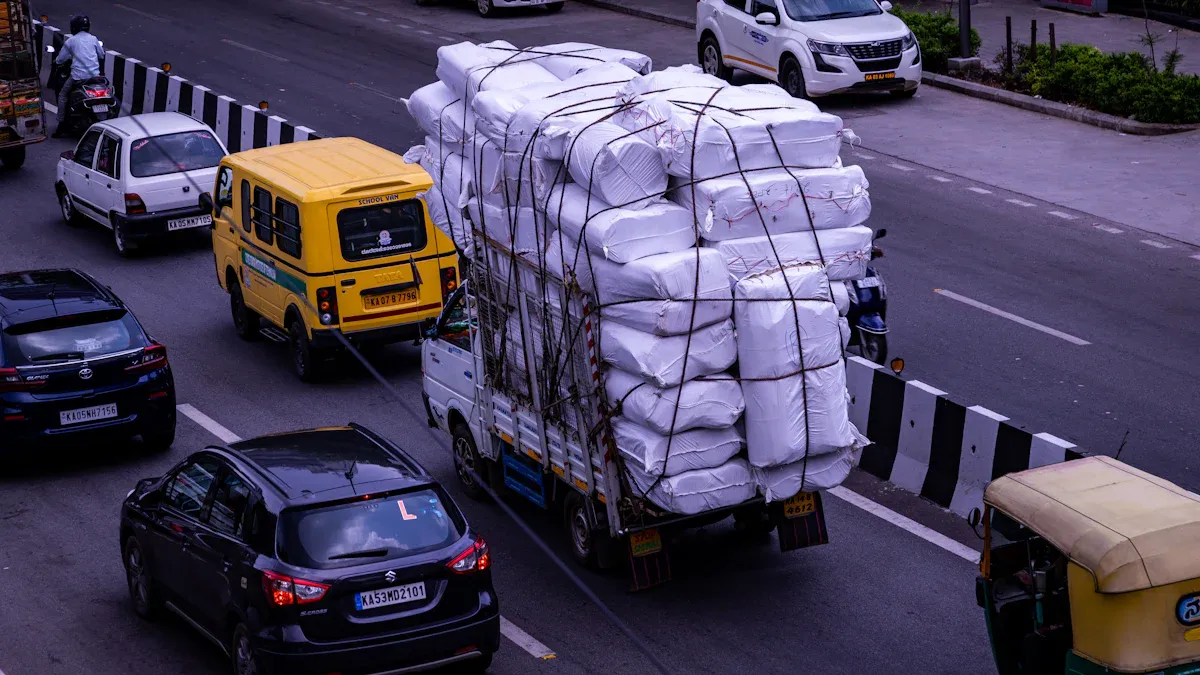
You want your cargo to stay put during the trip. If boxes slide or tip over, you risk damage and accidents. Load securement is a big deal for the safety of goods. When you fasten everything tightly, you lower the chance of shifting or falling. Loose cargo can make your vehicle unstable and put everyone on the road in danger.
Here are some smart ways to keep your load steady:
- Use sturdy packaging to protect your items from bumps.
- Fasten goods with straps, nets, or other restraint systems.
- Fill gaps between boxes with padding or dunnage to stop movement.
- Spread the weight evenly across the floor of the truck.
- Check your packing and securing before you hit the road.
- Train your team so everyone knows how to load safely.
Tip: Always use warning signs on your vehicle. Signs like “Hazardous Materials” or “Fragile” tell others what you are carrying. These signs help emergency crews and keep everyone safer.
Vehicle Stability
Keeping your vehicle stable is just as important as securing the cargo. If your load shifts, your truck can tip or sway. You want to avoid that at all costs.
- Secure cargo firmly so nothing moves during the drive.
- Use lashing systems that meet safety standards.
- Place heavier items at the bottom and center for balance.
- Check straps and lashings during stops to make sure they stay tight.
- Distribute weight evenly over the axles for a smoother ride.
When you follow these best practices, you protect your cargo, your drivers, and everyone else on the road. You also help maintain the safety of goods from start to finish.
Loading and Unloading Safety
Safe Loading Practices
You want to make sure your goods stay safe from the very start. Loading is a big moment for the safety of goods. If you rush or skip steps, you risk damage before the trip even begins. Here are some tips to help you load like a pro:
- Check the vehicle floor for water, oil, or sharp objects before you start.
- Stack heavy boxes on the bottom and lighter ones on top.
- Use a checklist to make sure you do not forget anything.
- Keep walkways clear so no one trips or drops a box.
- Use ramps, lifts, or forklifts for heavy items. Do not try to lift too much by hand.
Tip: Always talk with your team before loading. A quick meeting helps everyone know their job and keeps things running smoothly.
Damage Prevention During Unloading
Unloading can be just as risky as loading. You want to avoid drops, spills, or crushed packages. Here’s how you can protect your cargo at the end of the journey:
- Open doors slowly. Items may have shifted during transit.
- Use the right tools, like dollies or pallet jacks, to move heavy goods.
- Check each box for damage as you unload it.
- Place goods on clean, dry surfaces.
- Move items to their storage spots right away.
If you follow these steps, you lower the chance of accidents and keep your shipments in top shape. You show your customers that you care about every detail.
Vehicle and Route Safety
Selecting the Right Vehicle
It is important to pick the right vehicle for your goods. First, think about what you need to move. If your items are heavy or very big, use a truck with lots of space. The truck should have strong suspension too. For fragile or perishable goods, use vehicles with climate control. Extra padding helps keep these items safe. Always check the vehicle’s maintenance records before loading. A truck or van that is well cared for is less likely to break down. This keeps your cargo safe. If you ship hazardous materials, use vehicles that meet safety standards. Make sure they have the right warning signs. Ask your transport company about their fleet. Make sure their vehicles fit your needs.
Tip: Vehicles with GPS tracking let you watch your shipment live. You can see problems early and keep your goods safe.
Route Planning
Good route planning helps you deliver on time and avoid problems. You need to think about many things before you start driving. Shorter routes save time and lower the risk of spoilage. Try to find ways to spend less on fuel and tolls. Pick routes that fit your delivery schedule. This is important for urgent shipments. Make sure the route works for your cargo’s size and weight. Check local rules about driving hours and cargo types. Stay away from routes with storms or floods. Watch out for roadworks and traffic jams. Plan detours if you need them. Make sure your delivery place is open when you arrive.
You can use GPS tracking and other smart tools to get updates. These tools help you change your route fast if something goes wrong.
Here’s a quick look at how good route planning helps:
| Strategy | Benefit |
| Reduced Transit Time | Less spoilage and faster delivery. |
| Real-time Monitoring | Fix problems fast and keep goods safe. |
| Compliance Management | Follow rules and avoid fines. |
| Minimized Handling | Fewer stops mean less risk of damage. |
| Cost Efficiency | Save money and protect your profits. |
When you plan your route well, you lower risks. You also make sure your shipments arrive safely.
Staff Training and Hygiene
Safe Handling Training
You want your team to treat every shipment with care. Good training helps staff keep goods safe. Teaching the right way to lift and move items lowers accidents. It also helps stop damage. Here are some helpful training programs:
| Course Title | Description |
| Material Handling and Storage | Learn safe ways to lift and move things. Use hands or equipment. Find out how to handle special materials. |
| Workplace Online Safety Training | Learn about hazards, PPE, slips, falls, and back safety. |
Tell your team to report any damage or accidents. Forklift operators should not use rack columns or beams as guides. When everyone loads goods safely, you get less damage and a safer place to work.
- Training on loading the right way stops accidents.
- Forklift drivers should use racks the correct way.
- Reporting damage helps build a safe workplace.
Hygiene and Protective Gear
Clean hands and tools help keep shipments safe. Your staff should follow good hygiene, especially with food or sensitive goods. Wet cleaning kills germs. Dry cleaning works for items that do not cause allergies. Food-grade washing must follow strict rules to stop cross-contamination.
- Use pest control and clean vehicles often.
- Keep the right temperature during transport.
- Pick strong pallets and good packing materials.
- Teach your team about hygiene.
- Talk clearly with shippers and receivers.
Check for dirt, bacteria, and pests before loading. Sweep out trash and check seals. Clean and inspect often to keep things safe.
Protective gear is important too. Gloves, vests, and strong clothes keep your team safe from cuts and burns. Bright gear helps drivers see each other and avoid accidents. You keep your staff and cargo safe.
Special Goods Safety
Perishable Goods
You want perishable goods to stay fresh and safe. These items can spoil quickly if not handled right. Use refrigerated trucks or containers to keep them cold. Pack food, flowers, or medicine with ice packs or gel packs. Check the temperature often while traveling. Put a thermometer inside the cargo area to watch it. If the temperature changes, fix the problem fast. Label boxes with “Keep Refrigerated” or “Perishable” so people know to be careful.
Tip: Load perishable goods last and unload them first. This helps keep them cold for as long as possible.
Hazardous Materials
Hazardous materials need special care. You must follow strict rules for these items. Use strong, leak-proof containers for every package. Put the right hazard sign on each box. Keep a copy of the safety data sheet with your shipment. Train your team on what to do if there is a spill or leak. Never put hazardous materials with food or regular goods. Check all rules before you ship anything. This helps you avoid fines and keeps everyone safe.
| Hazard Type | Example Items | Special Action |
| Flammable | Paint, fuel | Use fireproof boxes |
| Corrosive | Acids, cleaners | Wear gloves, goggles |
| Toxic | Pesticides | Seal tightly, label |
Live Animals
Live animals need gentle care during transport. Pick a vehicle with good airflow and the right temperature. Give animals enough space to stand and move around. Use cages or crates that fit each animal’s size. Check on the animals during the trip to make sure they are okay. Give them water and food if the trip is long. Tell your driver to drive smoothly and not stop suddenly. Mark the vehicle with “Live Animals” signs so everyone knows to be careful.
When you follow these steps, you help keep special shipments safe. Your careful actions make a big difference.
You can keep shipments safe by using smart steps each time. Always check vehicles and equipment to find problems early. Train drivers and team members so they know what to do. Use strong packaging to protect your cargo from damage. Secure your cargo so it does not move during transport. Here are some top safety practices:
| Best Practice | Description |
| Driver training | Teach safe driving and handling hazardous goods. |
| Regular vehicle checks | Inspect trucks and forklifts daily. |
| Load securement | Fasten cargo to stop shifting. |
Look at your safety plan now and see if it needs changes. Update your rules and give your staff more training. These steps help keep your goods and business safe.
FAQ
What should you do if your goods get damaged during transport?
Report the damage right away. Take photos. Contact your shipping company. Keep all paperwork. Ask about insurance or claims.
How can you make sure your cargo stays safe in bad weather?
Use waterproof packaging. Check weather reports before shipping. Pick routes that avoid storms. Ask your driver to slow down and stay alert.
Do you need special training to handle hazardous materials?
Yes, you need training. Learn safety rules. Know how to use protective gear. Follow all laws for shipping hazardous goods.